Subjective Editions
Bogotá / Puerto Colombia, 2013 – 2015
«Subjective Atlas of Colombia», Curatorship & Editorial Design
Executive Production•Curatorship•Editorial Design•Bilingual publication: English-Spanish•Paperback, 16.5 x 22 cm, 232 pages•Print-run: 2.800 copies•Typeface: Buendía by César Puertas•Printed by Escala S.A., Bogotá, October 2015•Concept: Annelys de Vet•Executive production: Hugo Herrera Tobón, Moniek Driesse & Annelys de Vet•Graphic design and editing: Hugo Herrera Tobón, Moniek Driesse & Annelys de Vet•Editorial coordination: Hugo Herrera Tobón & Moniek Driesse•Editors/Curators: Hugo Herrera Tobón, Moniek Driesse, Annelys de Vet (with La Usurpadora and the Art Department of Universidad de Los Andes)•Introduction: Guillermo Vanegas•Cover Image: «Language of Fracture» by Emma Anna•Last page: «Interspersed Colors» by María Elena García•Proofreading: Guillermo Díez•Translation: Nicolás Barbosa López•Participants: Trixi Allina Bloch, Emma Anna, Andrés Bernal Guarín, Felipe Bonilla, Milena Bonilla, Kathy Bossa, Juan Pablo Bravo Rodas, Adalberto Camperos, Mario Cano, Samuel Castaño, Sandra Teresa Castro, Diana Marcela Cuartas, Camilo Delgado CAMO, Natalia Domínguez Rangel, Moniek Driesse, Lina Espinosa, Cristina Figueroa, Fernando García Vásquez, Maria Elena García, Felipe Ginebra, José Alejandro González, Diana Rosalba Granados Manrique, Catalina Hernández, Luis Hernández Mellizo, Hugo Herrera Tobón, Iván Herrera, HUSOS, Maite Ibarreche, Tahuanty Jacanamijoy, Santiago Leal, Mario Llanos, Sergio Mantilla Soler, Diego Mariño, Carola Medina, Susana Mejía, Luis Meyer, Ana Patricia Montenegro, Coste Montenegro, Mónica Naranjo, NEZU AYMO architects, José Olano, Viviana Palacio, Catalina Parra, Jonathan Peña, Juan José Pérez, Populardelujo (Roxana Martínez, Esteban Ucrós, Juan Esteban Duque), Libia Posada, Adriana Ramírez, Giovanni Randazzo, Camilo Rico, Gwendy Rozo Vargas, Lydia Rubio, María Isabel Rueda, Andrea Sánchez Zuluaga, Wilger Sotelo Rojas, Luisa Ungar, Stephan Cornelio Velema, Carlos Vergara•With the support of Cámara de Comercio de Bogotá, Embassy of the Kingdom of the Netherlands in Colombia, Ministerio de Cultura de Colombia, Universidad de los Andes, Fundación Tridha and Stimuleringsfonds Creatieve Industrie (book launch)•Special thanks to Ministerio de Cultura de Colombia, Jaime Cerón, Mónica Páez & Nicolás Consuegra, Milena Bonilla, Santiago Leal, Luisa Ungar, Maria Isabel Rueda & Mario Llanos, Juan Fernando Cáceres, Julie Cangrand, Natalia Román & Floris van Eijk, Adriana Ramírez, Juan Esteban Duque, José Roca, Camilo Rico, Mónica Naranjo, CAMO, Bas Wiegers, Rui Ramos•In memoriam Armando de la Torre (former director of Fundación Tridha)•Published by Semana Libros, 2015•ISBN: 978-958-58987-7-6•Distribution: Publicaciones Semana•Creative Commons BY-NC-ND 3.0•To buy this book in Europe please contact us via Subjective Atlas Editions.•In Colombia & the Americas, you can contact Semana Libros
(Excerpt taken from «Foreword», pgs. 6 & 7)
«A map is a coded and compacted version of reality, created by simplifying many layers of information. This reduction requires making multiples choices in the context of a territory shown, about what to include and what to leave out. Each one of these choices is as political as it is subjective. As such, a map is necessarily an incomplete and biased representation of reality: the ‘Subjective Atlas of Colombia’ is no exception.
We believe that the only way to capture a picture of contemporary Colombian society is from the inside. The people of Colombia are its best possible cartographers. It’s the citizens who have the personal understanding and experiences of a place. Their personal points of view reveal insights into what it means to live in Colombia today and what global developments mean on a local level. That is where «geo-poetry» starts to be written, and that is how this atlas came into being.
We asked more than sixty artists, designers and other keen observers in Colombia to bring their country into perspective. We worked with diverse groups of individuals during workshops in both Bogotá and Puerto Colombia. Together we researched current notions around Colombia’s identity drawn from personal memories, impulses and dreams. We discussed what kind of visual symbols should be adopted and found a common ground that helped us to identify key local discussions around the concepts of self-exoticisation and post-colonialism. During the workshops we explored how the participants connected emotionally with their domestic environment and with public space, and how their perceptions of Colombia’s vernacular heritage were reshaped by forces of globalisation.
We observed how the subjects of the work of Colombian artists’ are shifting rapidly past political irony and unmediated criticism of the state. There is less desire to portray violence and armed conflict. Instead, the works in this atlas are an attempt to capture something of the essence and soul of places inhabited and appropriated by Colombians.
Looking at all works together they form an unwitting autobiography of the tastes, values, aspirations and fears of Colombia today. They reveal how Colombian cultural identity finds itself at a crossroads, pivoting between the desire for sociopolitical engagement and poetic escape. The «Subjective Atlas of Colombia» grasps these processes of change, and offers the viewer the possibility of de-coding reality.
As such this publication can be seen as a form of contemporary historical memory; tracing what gets erased and what comes to replace it. The many contributions to this document touch the fabric of society in different ways, shifting our perceptions so that we get clear glimpses of the foundations beneath. In this way this book can be used as a collective tool that unsettles and challenges social, political, cultural and economic ideas and prejudices. It has become a catalogue of fresh ideas and opportunities, demonstrating how creative practitioners are critical to opening up new ways of seeing and thinking. It’s this talent and open mentality that can uncover and forge new ways to resolve conflict, or create change, which can lead to more a conscious and peaceful society.»
— Hugo Herrera Tobón, Moniek Driesse & Annelys de Vet
Also in press & lectures →
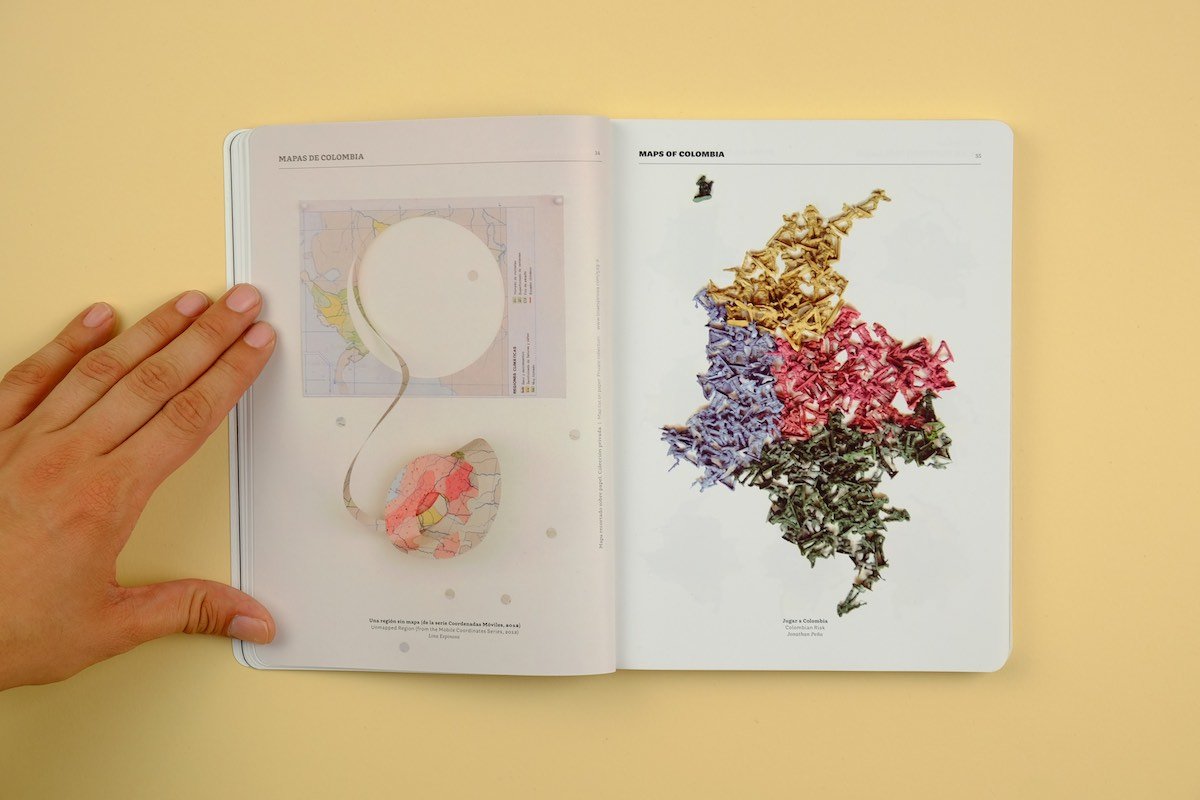
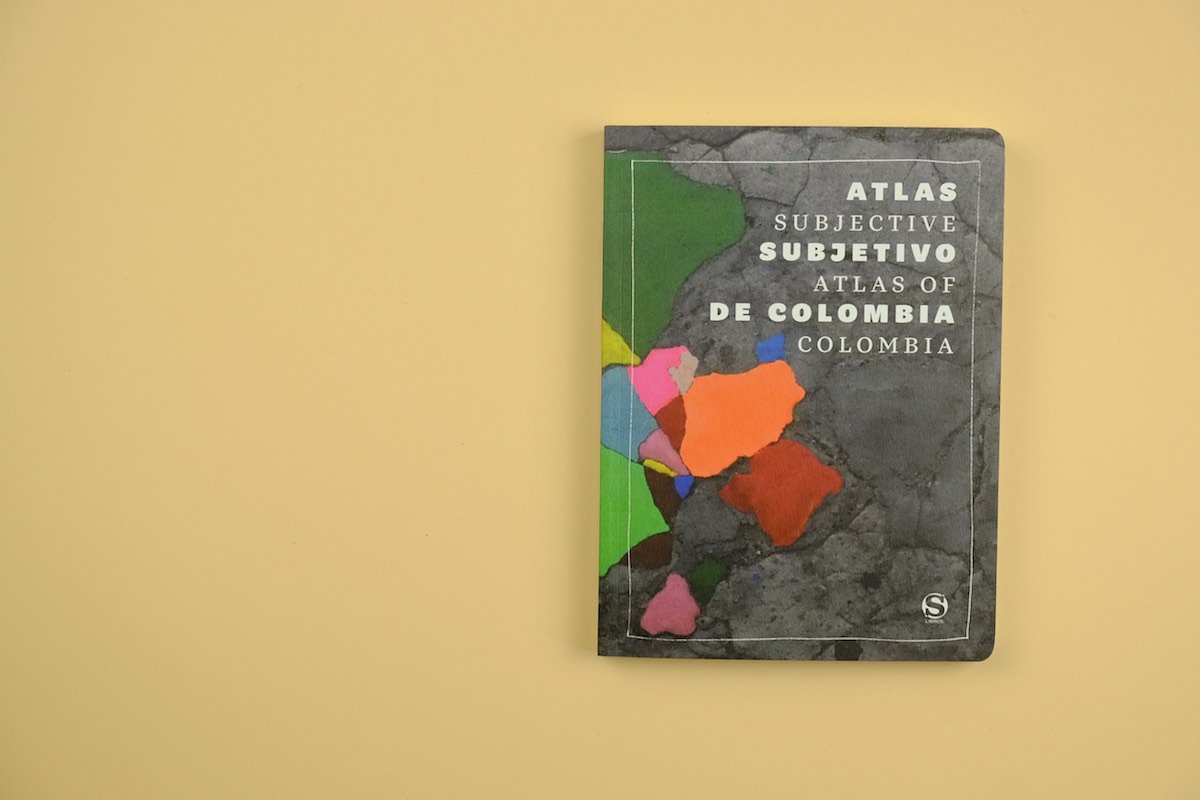


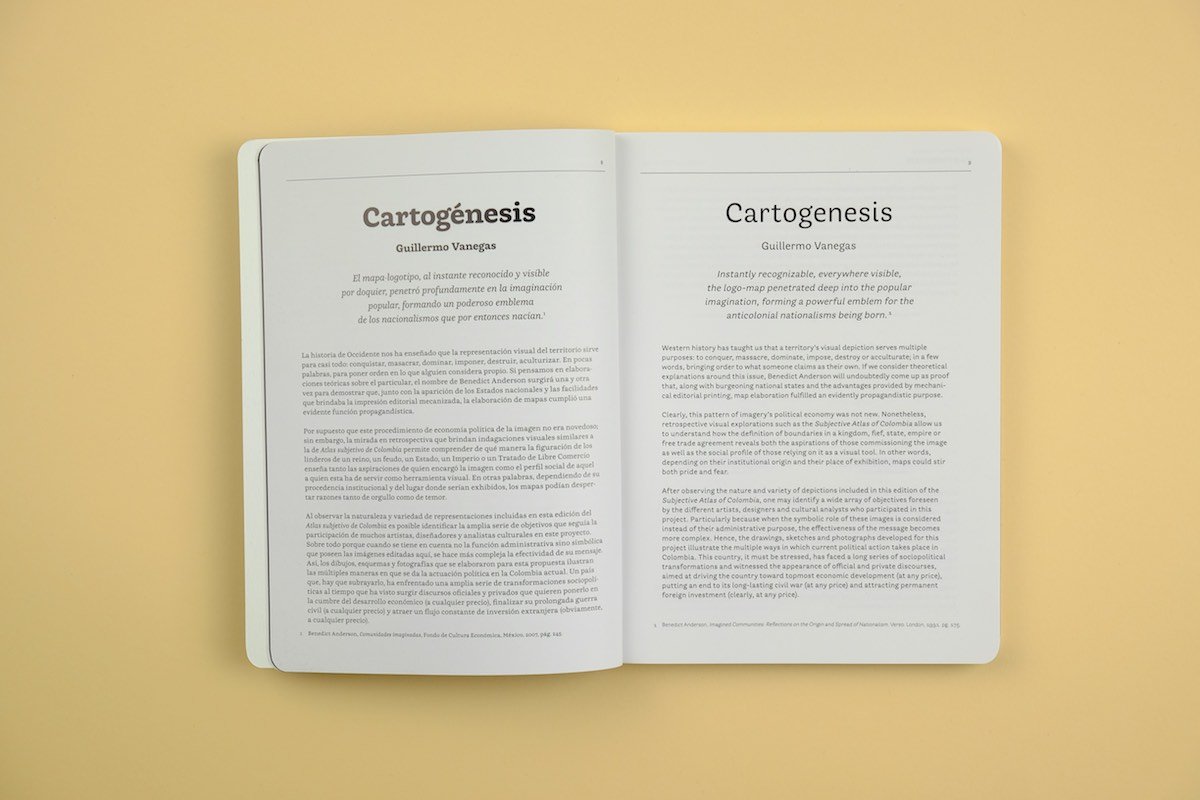


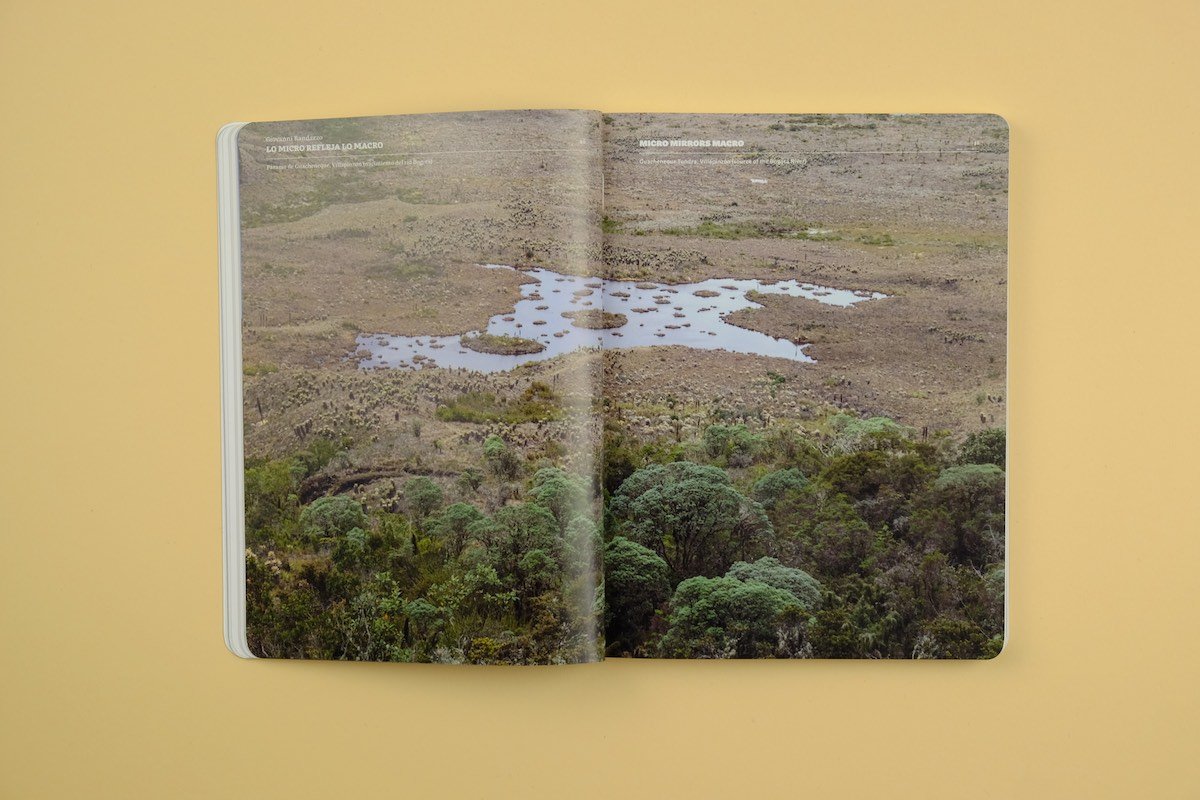


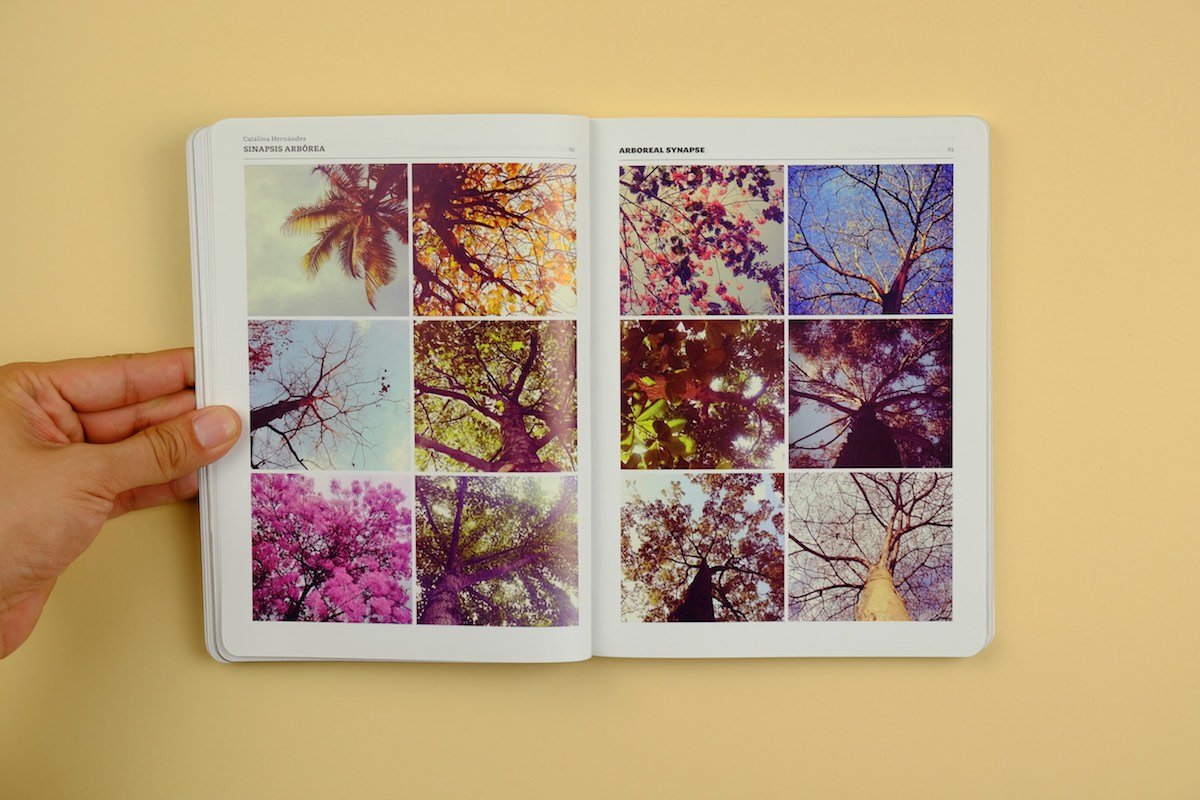


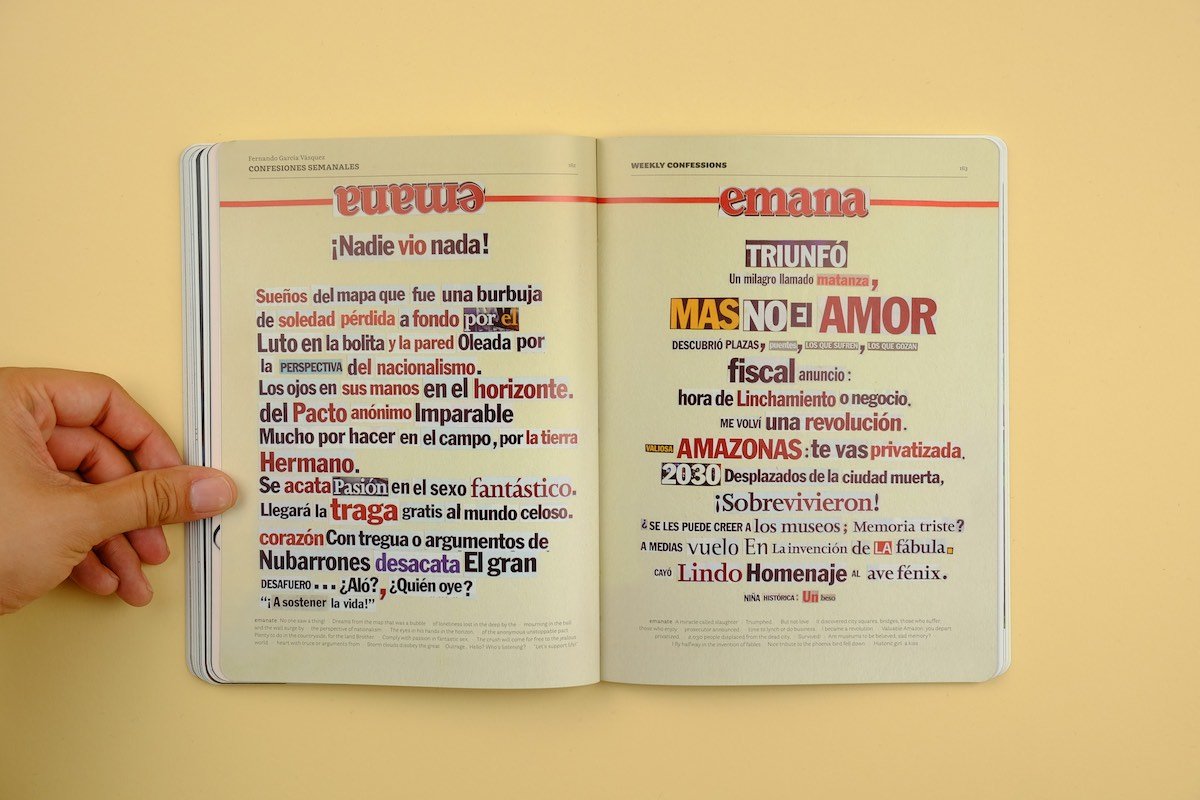

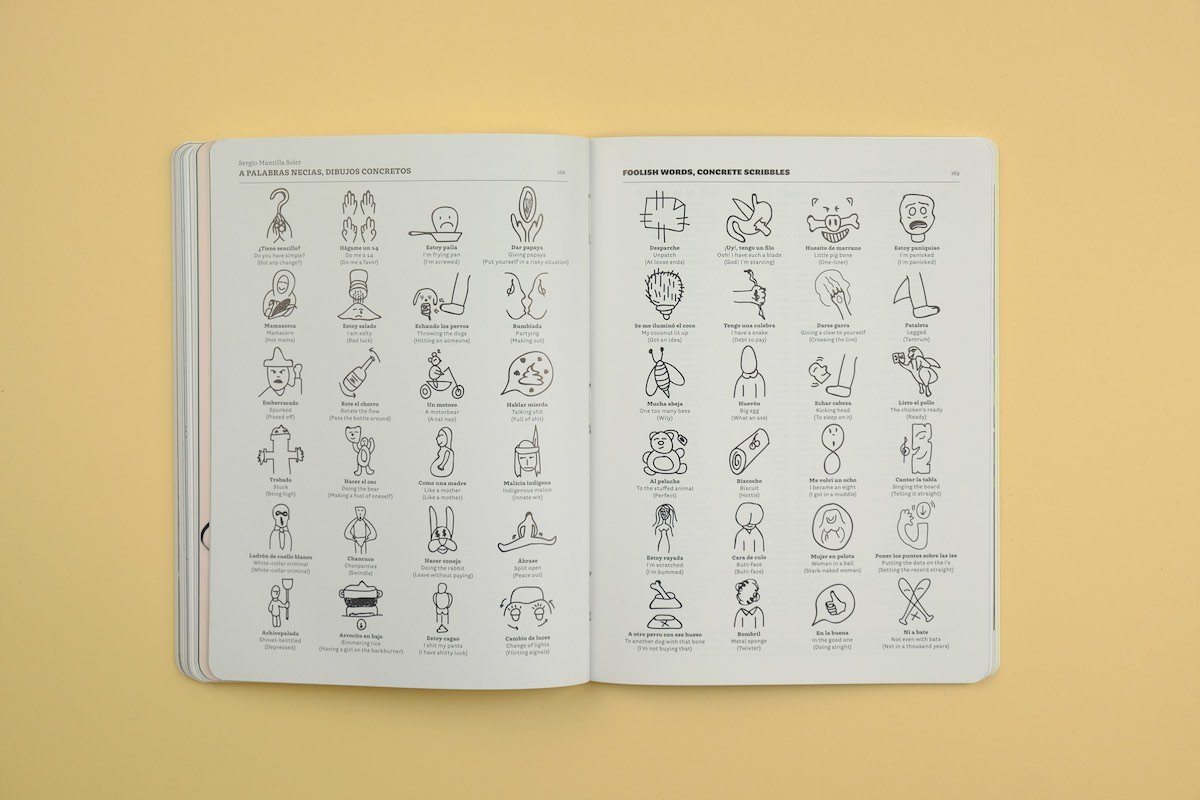


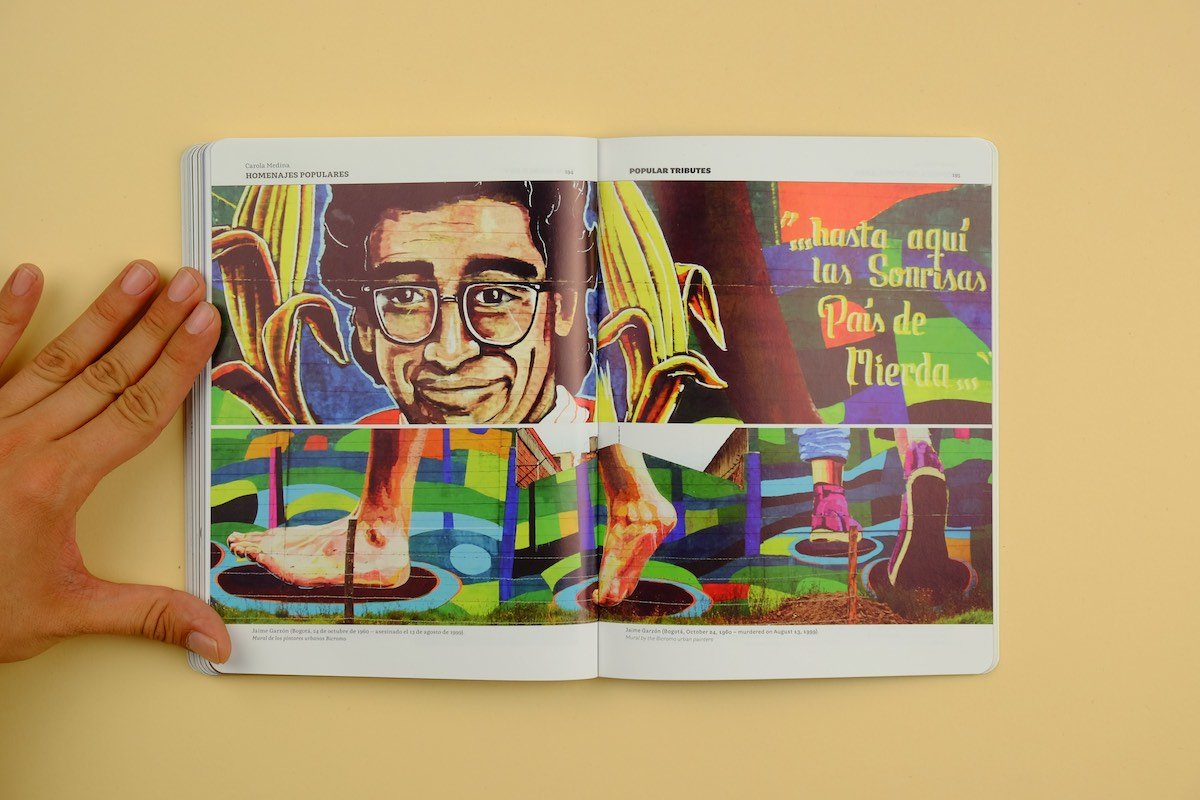


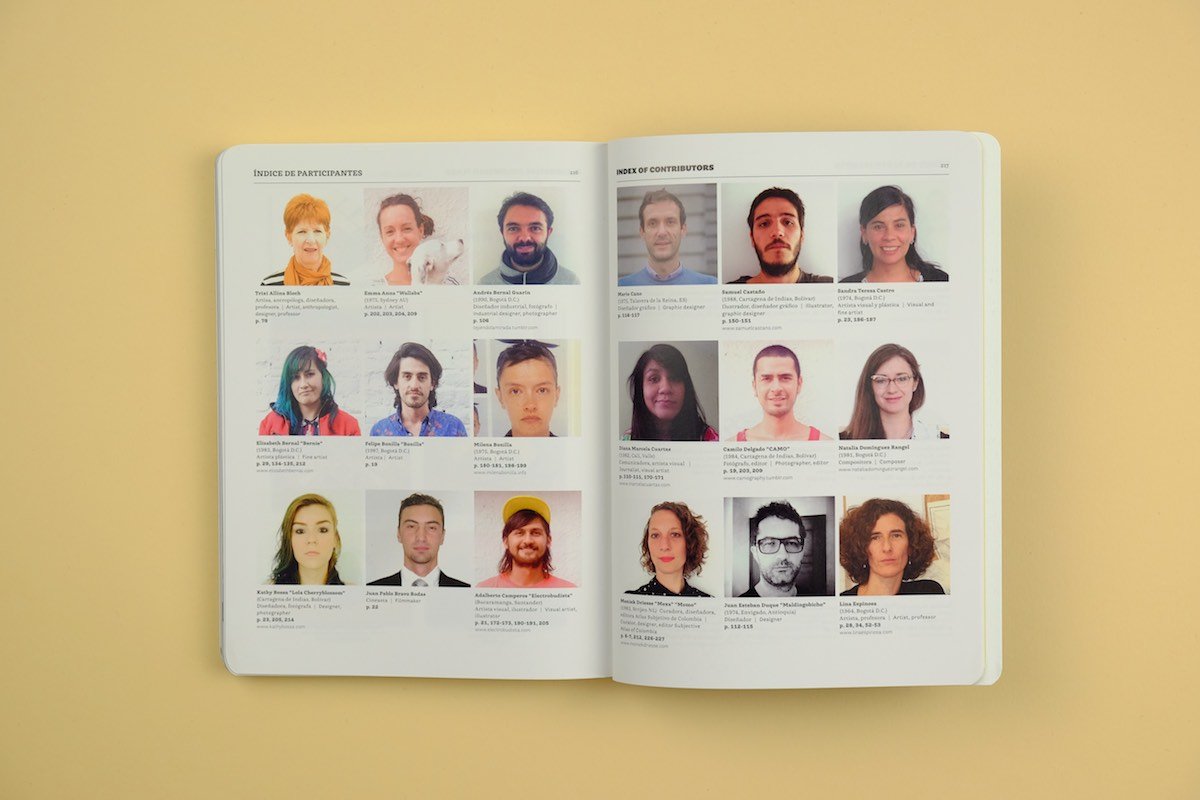

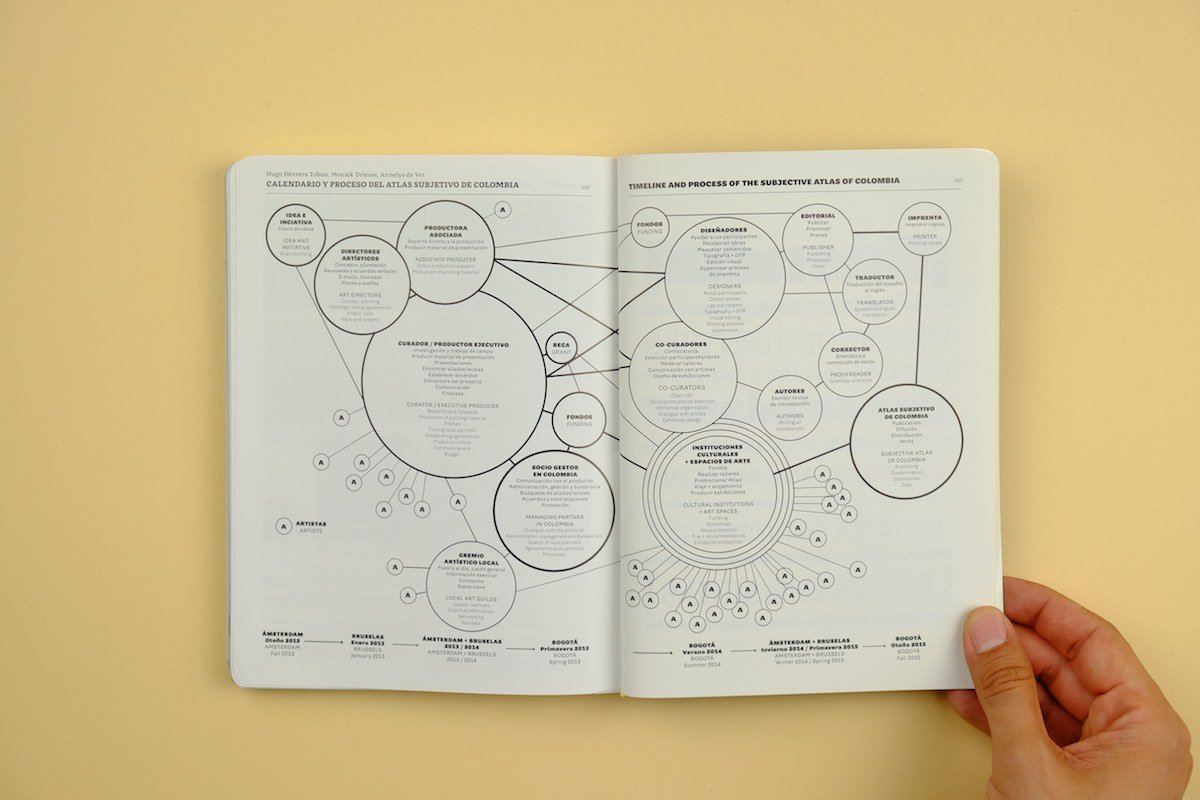
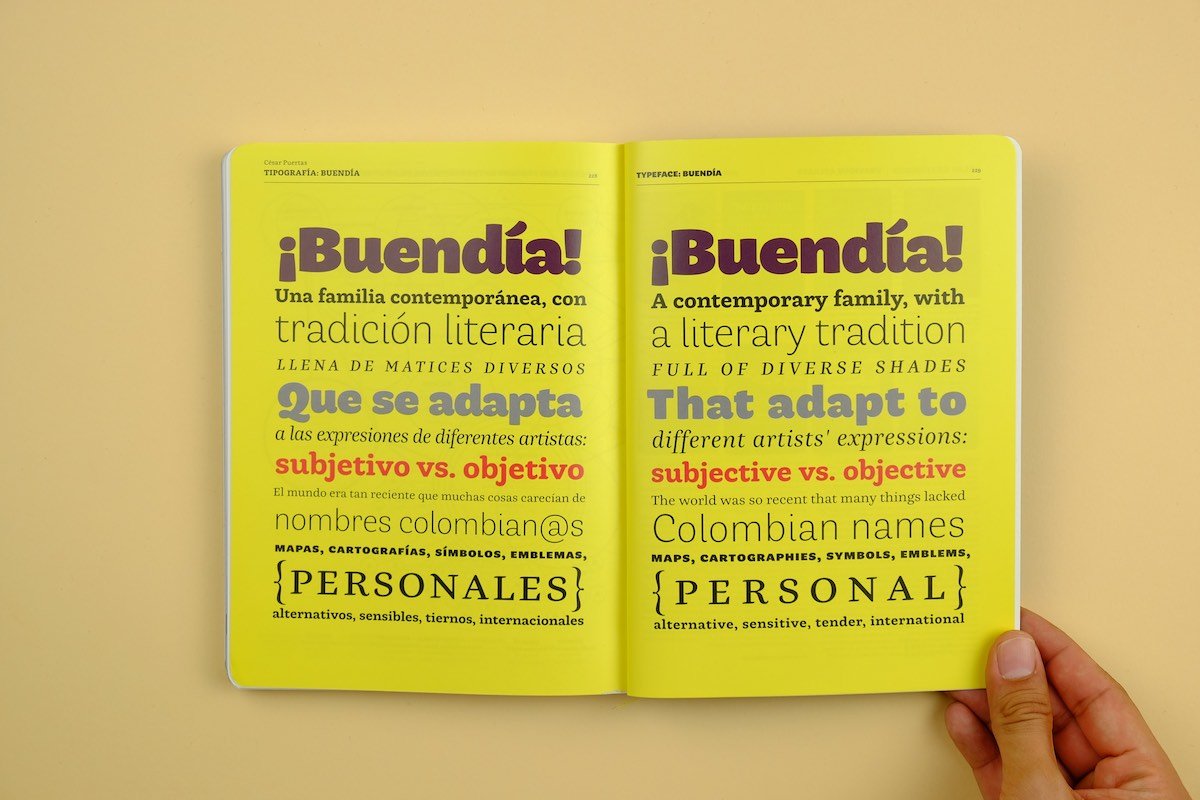
Process images



Press
05.2013 · One World Magazine (NL) · «(In Colombia) Everyone sees what one wants to see», in «Land in Sight», curated by Annelys de Vet
28.10.2015 · Arcadia magazine (CO) · Book launch
09.11.2015 · UN Radio, «El coloquio» with Guillermo Parada · Interview (in Spanish)
10.11.2015 · Caracol Radio, «La ventana» · Interview (min. 39:30–56:00, in Spanish)
22.11.2015 · W Radio · Interview (in Spanish)
23.11.2015 · Periódico Arteria · Recommended books
22.04–05.05.2016 · FILBo, Dutch Pavilion · Lecture series with Annelys de Vet at Fundación Universitaria del Área Andina, Sociedad Colombiana de Arquitectos and Universidad Jorge Tadeo Lozano
29.04.2016 · Universidad Jorge Tadeo Lozano · Lecture «Design & Conflict Resolution» with Annelys de Vet (in Spanish)
05.2016 · Idea Books · Distribution in Europe
23.06.2016 · Arcadia magazine (CO) · Article (in Spanish)